
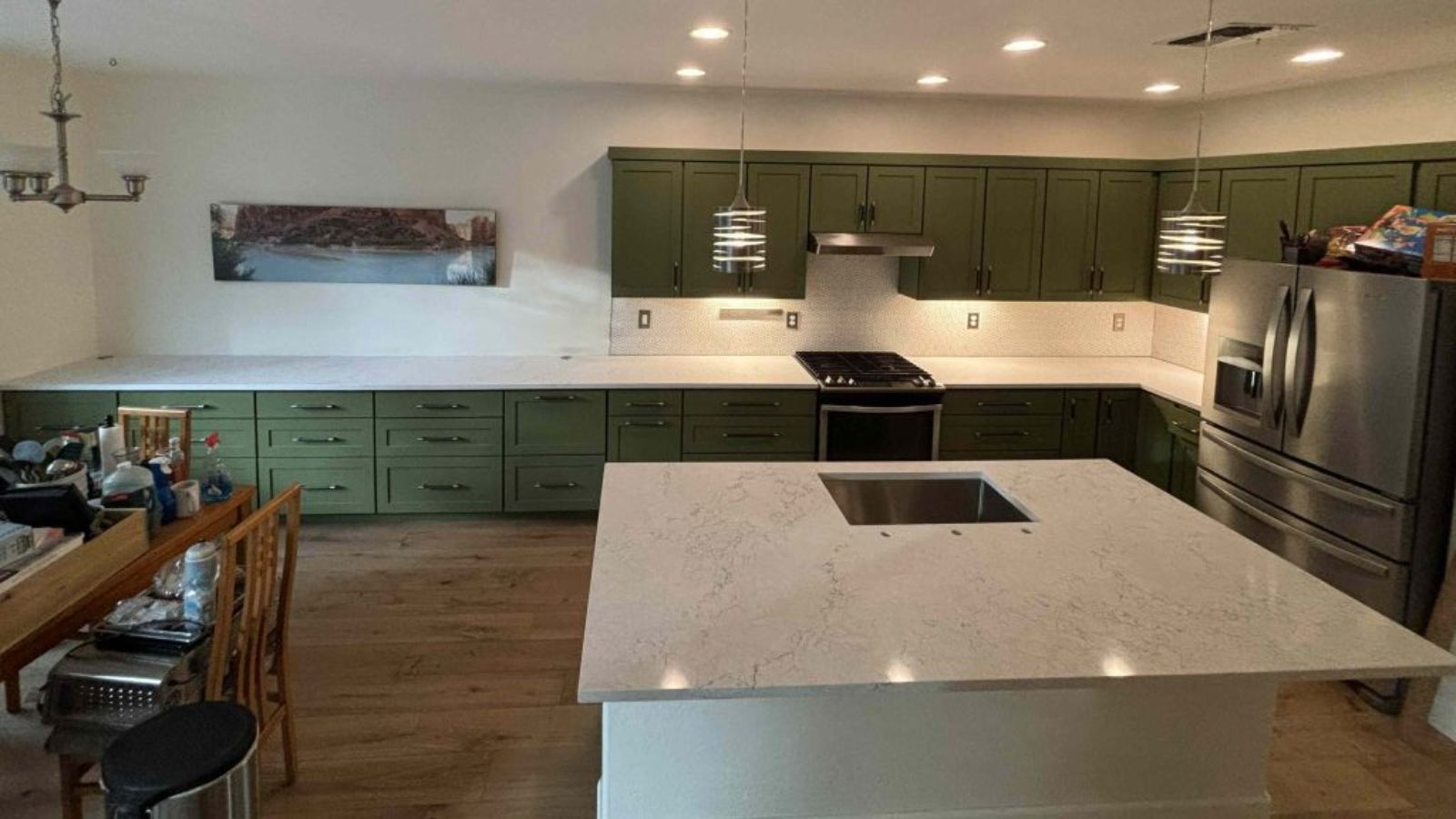
Choosing a countertop material is a major decision when remodeling a kitchen or bathroom. In Arizona, the choice is even more important. The desert climate, strong sunlight, and very high temperatures make the interior of the house difficult to manage. If you are renovating a family kitchen in Mesa or just changing a bathroom vanity in Phoenix, knowing your options will help you not only invest wisely but also, in the long run, avoid very costly mistakes.
This guide will tell you about the most commonly used countertop materials Arizona homeowners choose, what makes each one different from the others, and how to pick the right one for your lifestyle and budget.
Why the Arizona Climate Matters When Selecting Countertop Materials
Arizona heat is more than just a summer annoyance; it alters how surfaces behave and the durability of materials over time. UV exposure through large windows can cause fading in certain materials. The temperature change between air-conditioned rooms and very hot outdoor patios can cause stress on surfaces that are not designed for it. Humidity, which is normally very low, can rise during the monsoon season, posing a risk to porous stone if not adequately sealed.
Taking these issues into consideration, we shall briefly review the most popular countertop materials and their suitability for a house in Arizona.
Countertop Installation in Mesa & Phoenix: What Homeowners Should Know
If you are planning a kitchen countertop installation in Mesa or nearby Phoenix areas, it is important to understand how local conditions and service availability can impact your project.
In Mesa, most countertop installations take about 1–3 weeks from templating to completion, depending on the material and customization level. Quartz and granite are widely available, while porcelain countertops may require specialized fabrication due to their thin and dense structure.
Working with a local Arizona countertop specialist also ensures better slab selection in natural lighting, accurate measurements, and faster turnaround times. This is especially important in desert climates where precision installation helps prevent long-term material stress due to temperature fluctuations.
Desert Sky Surfaces: Natural Beauty That Stands the Test of Time
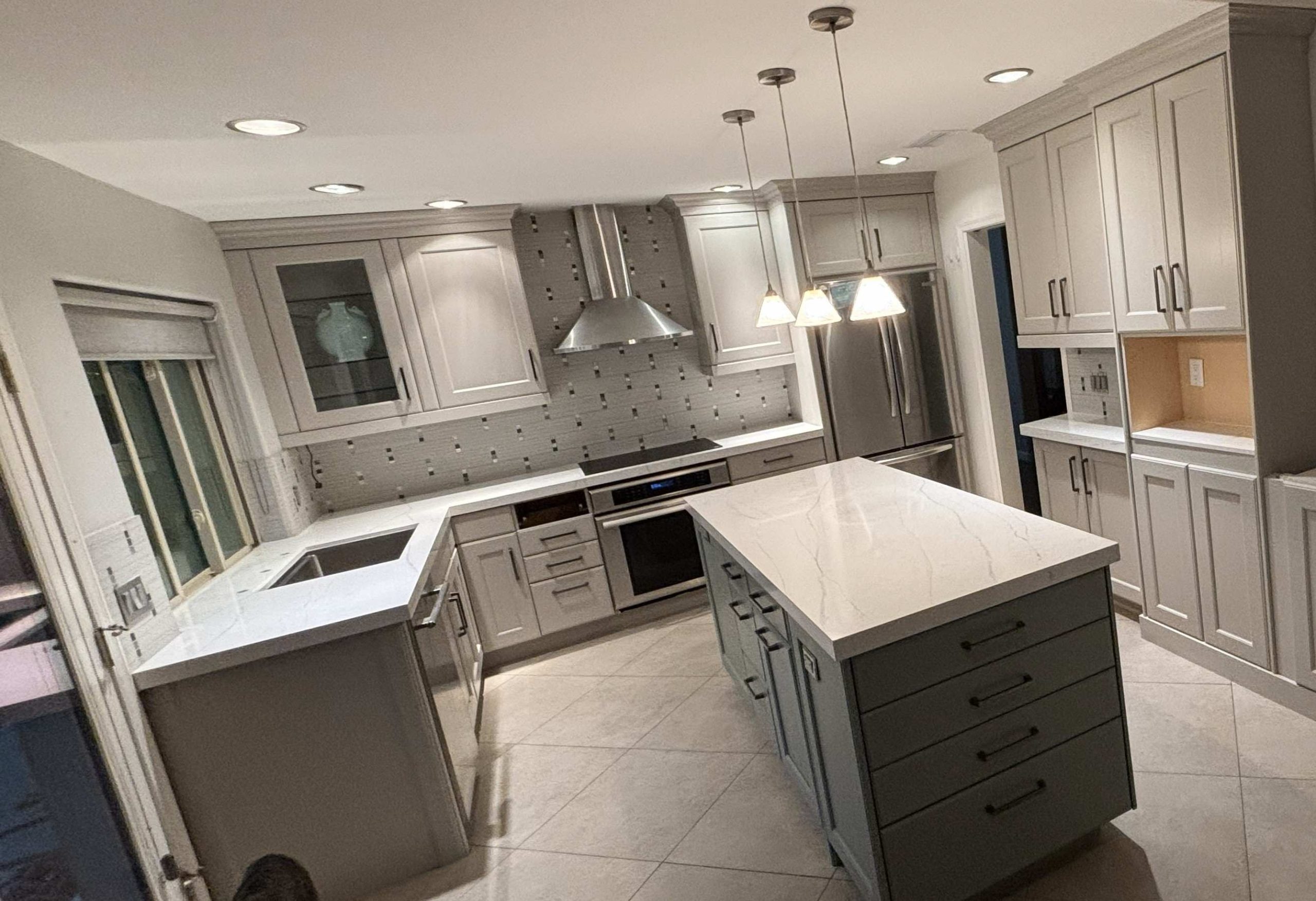
Granite remains one of the most popular countertop choices, and for good reason. It is an igneous rock formed naturally from minerals such as quartz and mica, which account for its exceptional hardness. It is scratch-resistant, very durable for day-to-day use, and can withstand the heat of intensive cooking.
What makes granite particularly attractive is that each slab is a unique work of nature. So, your countertop will have a unique look that no one else has. In addition to blacks and browns, you will find creams that harmonize well with Arizona’s desert colors. Actually, granite is a very versatile material that can be worked in a variety of ways and suits several design styles.
In terms of upkeep, granite needs to be sealed about twice a year to remain stain-resistant. Apart from that, just simple cleaning is enough to make it look great. If you are a family that is often in the kitchen, granite is a very robust material that you can count on for years to come.
Real Experience from Arizona Homes
In our experience working with Arizona homeowners, granite remains a top choice for households that cook frequently and need a surface that can handle heat and heavy use. In Mesa kitchens, many families prefer darker granite tones because they tend to hide wear patterns better over time.
We have also observed that homeowners who prioritize low maintenance often lean toward quartz, especially in busy family kitchens where ease of cleaning is a priority. These real-world preferences highlight how lifestyle plays a major role in choosing the right countertop material.
Quartz vs Granite: Understanding the Key Differences
The quartz-versus-granite debate often arises in countertop discussions, and both materials have their own merits.
Quartz is a man-made stone composed of 90-95% ground natural quartz crystals, combined with resins and pigments. Due to its non-porous nature, it does not need sealing and is naturally resistant to bacteria and stains, which is a big plus in kitchens. Furthermore, it provides uniform color and pattern, which is a major selling point for homeowners who favor a consistent, contemporary style.
Granite, conversely, offers a highly natural appearance with the kind of organic variations that engineered stones really can’t mimic. Besides that, it’s generally more heat-resistant on the surface, though trivets are advisable with any countertop material.
On a day-to-day basis, quartz scores higher for low-maintenance ease, while granite is the choice if you crave natural beauty and better heat endurance. Neither one is a clear winner everywhere; the deciding factors are your kitchen habits and the style that you personally connect with.
Which Lasts Longer in Arizona Conditions?
When it comes to long-term durability in Arizona’s climate, both quartz and granite perform well, but in different ways. Granite tends to handle heat better, making it ideal for kitchens where hot cookware is frequently used. Quartz, on the other hand, is more resistant to staining and does not require sealing, which makes it easier to maintain over time.
For indoor kitchens in Mesa, quartz is often chosen for convenience, while granite remains a strong contender for homeowners who value natural stone and higher heat tolerance.
Porcelain Countertops: A Modern, Lightweight Option
Porcelain countertop installation has become a very popular trend here in Arizona recently, and it is not hard to understand why. Porcelain has the advantage of being lightweight yet very strong. Besides that, porcelain countertops come in stylish, modern colors and patterns that can mimic the appearance of marble or natural stone without requiring the same level of maintenance.
Another remarkable property is that porcelain countertops are non-absorbent; they do not fade easily in sunlight, making them a great choice for outdoor kitchen areas. This is really an advantage in a state like Arizona, where outdoor living and entertaining are possible practically year-round. Also, it can withstand heat and humidity, so you can confidently choose porcelain for either kitchen or bathroom remodeling.
However, it is worth noting that cutting and fabricating porcelain is more challenging than natural stone; therefore, it is of utmost importance that you entrust the installation of this material to professionals.
Best Countertops for Outdoor Kitchens in Arizona
Outdoor living is a major part of Arizona lifestyles, and not all countertop materials perform equally well outside.
Porcelain is one of the best options for outdoor kitchens because it is UV-resistant and does not fade under direct sunlight. Granite is also a solid choice, although lighter colors tend to perform better in heat.
Quartz is generally not recommended for outdoor use in Arizona, as prolonged UV exposure can cause discoloration over time.
Choosing the right material for outdoor spaces ensures long-term durability and maintains the appearance of your investment.
Other Options Worth Considering
If you want something different from the main materials, here are a few options that cover certain needs:
- Marble can give a space an authentic touch of class, but it is a more expensive commitment than other stone countertops and requires frequent sealing.
- Quartzite looks like marble, but it is a little harder and offers durability on par with granite.
- Using Solid Surface materials is a cost-effective, highly repairable option if you want a smooth, uniform surface.
- Your best bet for bathroom circuits or laundry room counters might be leftover pieces, since they are cheap and the right size.
Common Countertop Mistakes Arizona Homeowners Should Avoid
Choosing a countertop without considering Arizona’s climate can lead to costly mistakes. Here are a few to avoid:
- Ignoring UV exposure when selecting materials for kitchens with large windows
- Choosing porous materials without proper sealing
- Not factoring in heat resistance for cooking-heavy households
- Hiring inexperienced installers for complex materials like porcelain
Avoiding these mistakes can significantly extend the lifespan of your countertops and improve overall satisfaction.
Tips for Choosing the Best Countertop for Your Kitchen
Here are some simple tips to help you make a decision:
- Think about your cooking style: If you cook a lot every day, you will need a surface that resists heat and scratches well, such as granite or quartzite.
- Consider the upkeep: For a surface that requires little maintenance, quartz or porcelain is the best choice, as they are easier to maintain over time.
- Align the material with your design preferences: Natural stone is a great match for traditional and transitional kitchens, whereas quartz and porcelain are wonderful choices for modern, minimalist interiors.
- Have a reasonable budget in mind: Material prices vary, but the quality of the installation is equally important as the slab itself. Do not forget to include the cost of professional fabrication and installation.
- Check the whole slab in person: Small samples can sometimes be deceptive. A full slab seen in Arizona’s natural light will give you a much better impression of how it will appear in your house.
Related Article: How to Maintain Granite Countertops After Installation?
Choosing a Countertop That Suits Your Home
There isn’t just one “best” countertop material. The right one for you is the one that works well with your cooking habits, cleaning preferences, artistic vision, and the amount of money you are willing to spend. The main thing is to know your options, ask the right questions, and work with seasoned experts who can guide you through the process.
At Desert Sky Surfaces, the staff is committed to helping Arizona homeowners with these activities, including slab selection, precise work, and professional installations throughout Phoenix, Mesa, and the surrounding areas.
If you want to discover your countertop possibilities, the best thing to do is to have a face-to-face meeting to look at the full slabs.
Why Working with Experienced Countertop Professionals Matters
Choosing the right material is only part of the process. Proper measurement, fabrication, and installation play an equally important role in how your countertops perform over time.
Experienced Arizona countertop professionals understand how local climate conditions affect materials and ensure precise installation that prevents cracking, shifting, or long-term wear.
Whether you are upgrading a kitchen in Mesa or remodeling a bathroom in Phoenix, working with skilled professionals helps protect your investment and ensures long-lasting results.
Frequently Asked Questions (FAQs)
Q1. What is the best countertop material for Arizona’s heat?
Granite stands out as the best countertop for kitchen material for Arizona kitchens because it is naturally heat-resistant. Quartz and porcelain are also good choices for indoor use; however, it is best to avoid direct contact between any material and very hot cookware. It is always advisable to use trivets for safety.
Q2. How often does granite need to be sealed in Arizona?
Generally, you should seal granite countertops 2 times a year. Because of Arizona’s dry climate, the stone is not exposed to moisture as often as in humid areas; however, you should regularly seal it to protect it from staining by oils and liquids.
Q3. Is quartz or granite better for kitchen countertop installation in Mesa?
Both granite and quartz are good options for kitchen countertops in Mesa. Quartz, being non-porous, needs no sealing and is therefore a more convenient choice for people with very busy lifestyles. Granite, on the other hand, is beautiful, and it can withstand heat better. Ultimately, your choice will be guided by your lifestyle, taste, and the amount of time you are willing to spend on maintenance.
Q4. Can porcelain countertops be used outdoors in Arizona?
Absolutely. Porcelain is among the very few countertop materials that can be left outdoors in Arizona. It is UV-resistant, does not lose its color under continuous exposure to the sun, and can withstand heat and occasional monsoon moisture very well, making it a great choice for outdoor kitchens and entertainment areas.
Q5. How long does countertop installation typically take?
From the day of measurement and templating to the day of installation, most countertop projects are finished in a few weeks. On installation day, depending on the size and complexity of the project, it can usually be completed in a single visit.
Q6. What is the most low-maintenance countertop material?
Quartz is considered the most low-maintenance option because it is non-porous, does not require sealing, and resists stains and bacteria.
Q7. Does quartz fade in Arizona sunlight?
Yes, prolonged exposure to direct UV sunlight can cause quartz to fade over time, which is why it is recommended primarily for indoor use.