

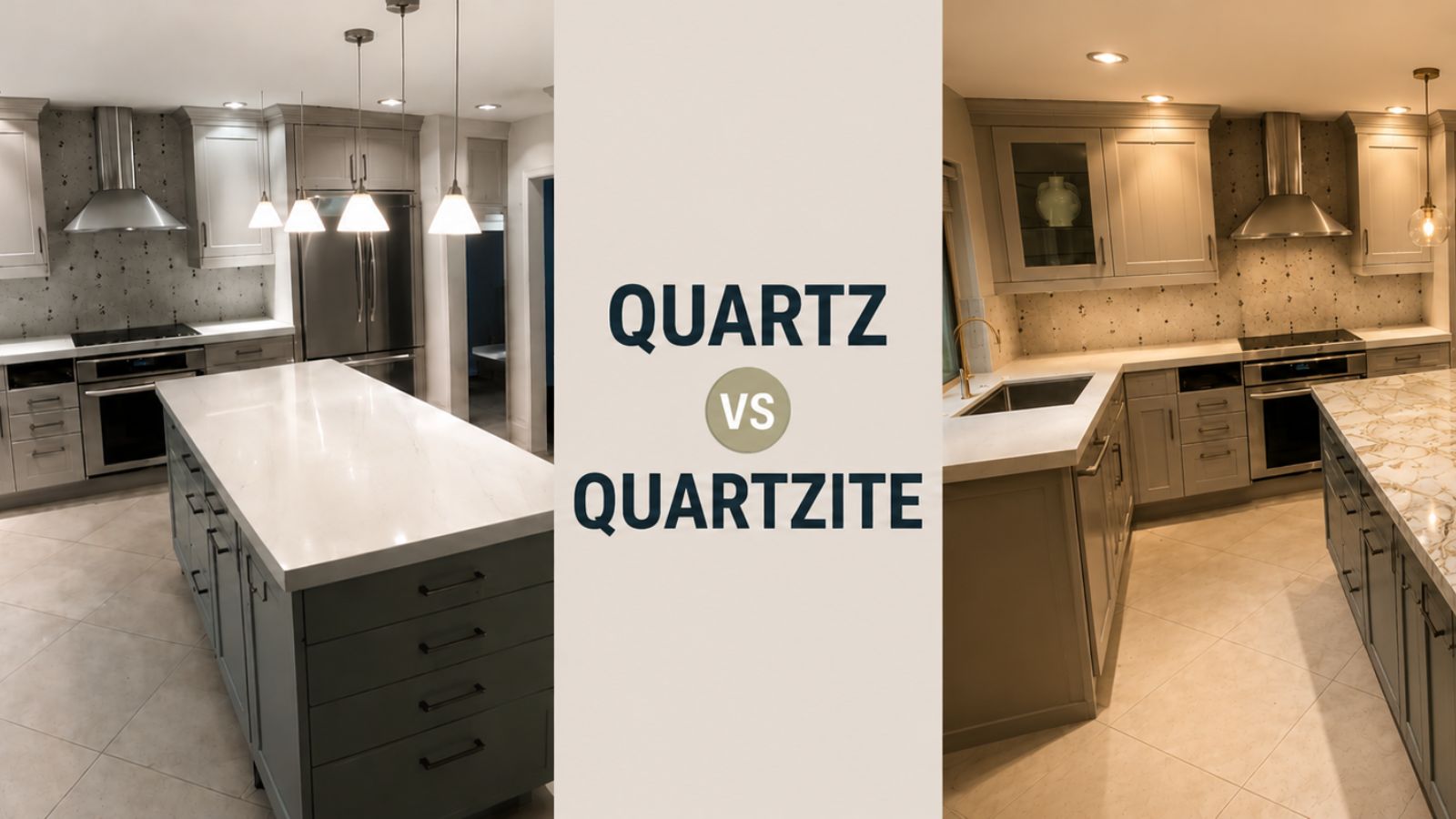
When choosing the perfect countertop material for your kitchen or bathroom in Phoenix, two popular options are quartz and quartzite. Many showroom samples look very similar in appearance, and both are favored choices among homeowners throughout the Valley. But in fact, they are two very different types of materials, and knowledge of these differences will help you save lots of time, money, and frustration.
This article explains the differences between quartz and quartzite, their suitability for Arizona’s challenging climate, and the factors to consider before taking the final step.
What is Quartz?
Quartz countertops installation is actually an engineered stone type. The composition of resins, pigments, and binders results in a durable, non-porous surface available in a variety of consistent colors and patterns.
Features of quartz countertops:
- Non-porous: Resistant to stains caused by liquids, oils, and food
- Steady look: Color and pattern are the same throughout
- Extensive range: Can pick one in almost any color, even ones that look like marble or granite
- Heat-sensitive: Prolonged exposure to high temperatures can cause damage; always put a trivet under hot items.
What is quartzite?
Quartzite is the result of sandstone subjected to extreme heat and pressure beneath the Earth’s surface, thus changing into crystalline rock. Each quartzite slab is unique, exhibiting natural patterns and differences that are impossible to duplicate.
Principal of quartzite countertops include:
- Quartzite has a natural appeal, with unique patterns and deep colors that are beyond the reach of any man-made stone.
- Among naturally occurring stones suitable for counters, quartzite ranks among the hardest.
- When it comes to heat resistance, quartzite is a superior choice as it can be heated with less risk than quartz.
- Since it has a porous surface, quartzite should be sealed regularly to prevent staining.
- Being a natural product and quite rare, quartzite tends to be priced higher than quartz.
Quartz vs Quartzite Countertops: What Matters Most in Phoenix
Phoenix’s climate is different from other places where the sun’s rays people are cooking outside, have open kitchens, and use family spaces the most. Both materials are great for Arizona residences, but their use and placement will determine their benefits.
Heat and UV Exposure
Quartzite is a natural stone that can withstand heat. Quartz, on the other hand, contains resins that can change color or shape when heated for extended periods. So if your kitchen has hot pots and pans, or you want countertops beside the outdoor grill, quartzite is the best option.
Day-to-Day Maintenance
Quartz scores a touchdown for its easy upkeep. Quartzite, since it is a natural stone, has some pores and thus has to be restored with sealant pretty frequently, usually once a year or even more, depending on usage. Not sealing can result in discolored spots over time.
Appearance and Design Flexibility
Deciding on this is mostly a matter of what you like. Quartz displays highly uniform, almost identical patterns, which is excellent if you want a design that will perfectly match a large kitchen. On the contrary, quartzite adds a graphic effect that is quite achievable with its top-of-the-line engineered stone.
Which one suits your Phoenix Property Better?
It mainly depends on your preference and what you value. Here’s an easy way to decide:
- If it is convenience, attractiveness, variety, and product consistency that are important to you, go for quartz.
- If you want a high-end appearance, natural stone, a one-of-a-kind pattern, and great heat tolerance, and you are ready to regularly seal the stone, then quartzite is the material for you.
Although the two materials, when used correctly, can perform well in Phoenix homes, the choice often depends on one’s lifestyle and aesthetic goals rather than on one material being experimentally superior to the other.
Working with a Local Countertop Expert
Desert Sky Surfaces is a local countertop company in Mesa that serves Phoenix and the surrounding communities. It provides face-to-face consultations where you can see samples, talk about your project needs, and receive reliable advice on which material suits your space and budget.
They not only help you choose the right material and custom-make the product, but also ensure accurate installation, making the whole process easy and clear for you from beginning to end.
Read More: How to Choose the Right Countertop Material for Your Home in Arizona
The Bottom Line
Quartz and quartzite deciding factors include your cooking habits, maintenance preferences, design goals, and budget. Before making a purchase, a consultation with a knowledgeable local countertop professional can help you cut through the confusion and make a decision you will be happy with for years to come.
Frequently Asked Questions
1. Is quartzite the same as quartz?
Not at all. While quartz is a man-made product made from crushed quartz combined with resins and binders, quartzite is a completely natural stone formed by geological pressure. The two materials, despite sharing similar names, are quite different in production and performance.
2. Does quartzite need to be sealed?
Certainly. Quartzite, being a natural stone, is porous and should be sealed at the time of installation, followed by resealing at intervals, usually once a year. Depending on countertop use, sealing is a necessary maintenance measure to protect against staining from liquids and oils.
3. Which countertop material is better for Arizona’s heat, quartz or quartzite?
Because quartzite is a natural stone and does not contain the resin binders present in quartz, it generally withstands heat better. Quartz can be damaged if exposed to heat for extended periods. Therefore, using trivets and hot pads is advised. For outdoor kitchens or heavy-duty cooking areas, quartzite is usually the more heat-resistant option.
4. Is quartz or quartzite more expensive?
Quartzite is typically more expensive than quartz, both in material cost and installation. The price varies based on the specific slab, origin, and the project’s complexity. Quartz offers a wider price range and is generally more accessible for budget-conscious projects while still delivering a high-end appearance.
5. How do I choose between quartz vs quartzite countertops for my Phoenix home?
Consider your lifestyle first. If you prefer a low-maintenance, stain-resistant surface that doesn’t require sealing, quartz is a strong fit. If you value natural stone’s unique appearance, superior heat resistance, and are willing to put do occasional upkeep, quartzite is worth the investment. Visiting a local showroom to compare real slabs side by side is one of the most helpful steps you can take before deciding.